ORCID Visibility Across Sudanese Universities: A Webometrics Study of Persistent Researcher-Identifier Adoption on Staff Pages and Journal Platforms

Research stream: Scholarly Visibility / Open Science (crossing into Openness — Academic & Research Web Presence). Published 20 September 2026.
Executive Summary
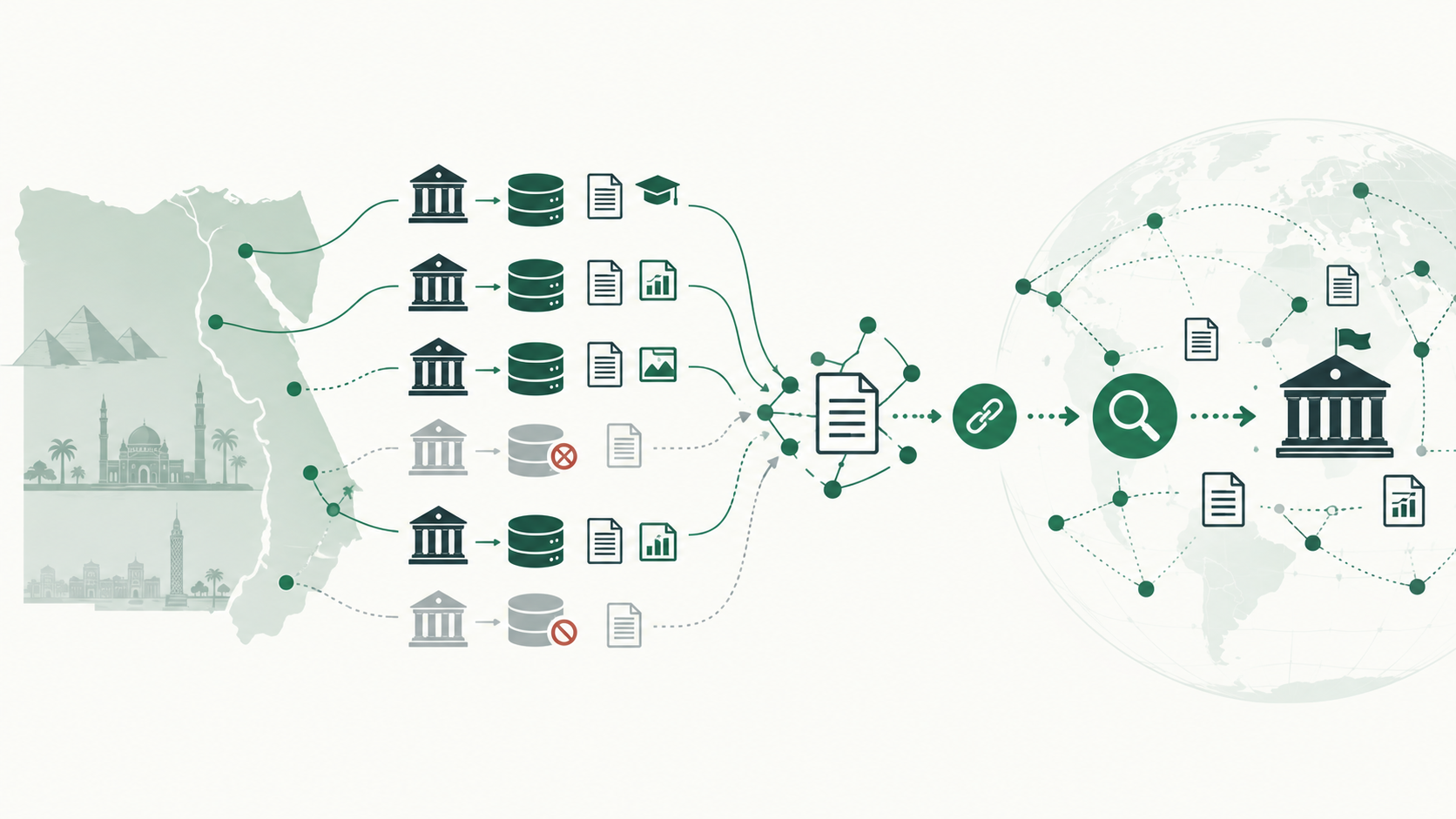
ORCID — the Open Researcher and Contributor ID — is a free, persistent identifier that lets a researcher's publications, affiliations, and contributions be reliably connected across databases, journals, and institutions, regardless of name variation or common-name ambiguity. UNESCO's Open and Inclusive Science Hub notes that ORCID can be particularly valuable for researchers in the Global South, whose work “is not often discoverable via major research databases,” because ORCID records are indexed by Google and other major search engines. Webometrics examined whether this identifier is visibly present where Sudanese universities' own researcher identity already lives online: public staff-directory pages and institutional journal platforms. Because ORCID's own public search API disallows automated querying under its robots.txt, this study could not use the API; instead, Webometrics directly inspected the websites of 10 purposively sampled Sudanese public universities between 19 and 20 September 2026. A public staff or faculty directory could be located and directly inspected at 4 of the 10 institutions; none of the 4 (0%) displayed a visible ORCID iD on the profile pages examined, though 3 linked instead to Google Scholar or ResearchGate. Six of the 10 universities operate an Open Journal Systems (OJS) journal-publishing platform — software with documented, ready-to-configure ORCID integration — but only 3 had a published article accessible for direct inspection. Across 10 individual author bylines examined on those 3 platforms, 1 (10%) displayed a visible ORCID iD. The findings point to a persistent-identifier infrastructure that is technically available in Sudan's university-journal software but rarely visible in practice, alongside a wider access constraint: several institutional websites could not be reached or inspected at all during collection.
Key Findings
- A public staff or faculty directory with individually addressable profile pages was located and directly inspected at 4 of 10 sampled universities (University of Khartoum, Omdurman Islamic University, University of Kordofan, and Red Sea University). None of the 4 (0%) displayed a visible ORCID iD on any profile page examined.
- Where a sampled staff-directory profile linked to any external scholarly-identity system at all, it was Google Scholar (University of Khartoum, Red Sea University) or ResearchGate (Omdurman Islamic University) — never ORCID.
- An Open Journal Systems (OJS) journal-publishing platform was identified at 6 of the 10 sampled universities. OJS has documented, native ORCID-integration functionality, per both ORCID's and the Public Knowledge Project's own technical documentation.
- Of those 6 OJS installations, only 3 had at least one recently published article accessible for direct inspection during the collection window: University of Khartoum's Engineering Journal, the University of Gezira's Journal of Engineering and Applied Sciences, and the University of Kordofan's affiliated Kordofan Journal of Medical & Health Sciences.
- Across those 3 accessible journal platforms, 10 individual author bylines were examined; 1 (10%) displayed a visible ORCID iD — a single author on one University of Khartoum Engineering Journal article. The remaining 9 bylines, spanning all three platforms, showed no ORCID iD.
- Two of the 6 identified OJS installations (at Omdurman Islamic University and the University of Kordofan's own Journal of Education) had the publishing software installed and configured but had not published any issue at the time of collection.
- Direct inspection could not be completed for 2 of the 10 sampled institutions' main websites at all (Al-Neelain University returned an HTTP 403 access block; University of Kassala returned an HTTP 500 server error), and 2 identified journal domains were unreachable during collection (Sudan University of Science and Technology's journal domains did not resolve; the University of Bahri's journal domain presented an invalid TLS certificate).
Why This Matters for Universities
A persistent researcher identifier does a specific, narrow job: it lets a publication, a grant, a peer review, or an institutional affiliation be attributed to the correct individual with certainty, even when that person shares a name with other researchers, publishes under name variants, or moves between institutions and countries. UNESCO's Open and Inclusive Science Hub frames this as a visibility issue with particular relevance outside the best-indexed research systems, since ORCID records are picked up by general search engines in a way that a researcher's raw publication list, scattered across repositories and journal sites, often is not. Webometrics' own methodology names “researcher profiles” and “faculty academic presence” among the dimensions considered under the Openness indicator's Academic & Research Web Presence component — a reflection of how directly a persistent, discoverable researcher identity relates to whether an institution's scholarly output can be found, correctly attributed, and connected back to the institution, independent of any specific numeric weighting Webometrics may or may not disclose for that component.
Authoritative Background
ORCID describes itself as “a global, not-for-profit organization” providing “a unique, persistent identifier free of charge to researchers,” designed to “enable transparent and trustworthy connections between researchers, their contributions, and their affiliations.” According to ORCID, more than 20 million ORCID iDs have been issued since 2013, with roughly 9 million actively used records in 2024. ORCID's own integration documentation, together with the Public Knowledge Project's (PKP) technical documentation for Open Journal Systems, confirms that OJS — the open-source journal-management software used by university publishing platforms worldwide, including several examined in this study — has a maintained, official ORCID plugin that lets editors validate and display an author's ORCID iD as a standard part of the submission and publication workflow. The presence of this functionality in the software does not mean any individual journal has switched it on or that authors have used it; whether it is visibly used is precisely what this study measured directly.
Separately, ORCID's own public search interface (pub.orcid.org) disallows automated querying under its published robots.txt, which meant this study could not use the ORCID API to look up Sudanese researchers directly, as an earlier phase of this research cycle had originally planned. Webometrics re-scoped the study to a method within the tools available this cycle: direct inspection of the rendered content of university staff-directory pages and journal-article pages, rather than a structured API query. This is a narrower method than a full ORCID-registry search would allow — it measures visible ORCID presence on Sudanese universities' own web properties, not the total number of Sudanese researchers who hold an ORCID iD, some of whom may hold one without it being displayed anywhere on their institution's website.
Research Question
Among a purposive sample of Sudanese public universities, is ORCID — as opposed to other researcher-identity systems such as Google Scholar or ResearchGate — visibly displayed on (a) public staff or faculty directory pages, and (b) recently published articles on the university's own institutional journal-publishing platform?
Methodology
Collection dates: 19–20 September 2026.
Population: Publicly accessible official websites of Sudanese public universities and their affiliated or institutionally hosted journal-publishing platforms.
Sample: A purposive sample of 10 public universities, selected from Wikipedia's list of Sudanese universities (cross-checked against each institution's own official domain) to span Khartoum-based and regional institutions rather than to represent a statistically random draw from Sudan's full public higher-education system: University of Khartoum (Khartoum), Sudan University of Science and Technology (Khartoum), University of Gezira (Wad Medani), Al-Neelain University (Khartoum), University of Bahri (Khartoum North/Bahri), Omdurman Islamic University (Omdurman), University of Kordofan (El Obeid), University of Kassala (Kassala), Red Sea University (Port Sudan), and University of Dongola (Dongola).
Selection rule: Institutions were chosen to include Sudan's largest and best-established public universities (University of Khartoum, Sudan University of Science and Technology) alongside a geographic spread of regional universities across Sudan's central, eastern, western, and northern states, so the sample was not limited to Khartoum-area institutions alone.
Variables recorded for each institution:
- Whether a public staff/faculty directory with individually addressable profile pages exists and could be directly accessed.
- Whether any external scholarly-identity link (ORCID, Google Scholar, ResearchGate, or similar) appears on an inspected staff-directory profile page.
- Whether the institution operates an Open Journal Systems (or comparable) journal-publishing platform, whether that platform has at least one published issue, and, where an article was accessible, whether each individual author byline on that article displays an ORCID iD.
- The HTTP-level accessibility of each site and platform at the time of collection (successful retrieval, access block, or server/connection error).
Evidence source: Each institution's own website and, where identified, its journal-publishing platform were retrieved and their visible, rendered content inspected directly at collection time using web search to locate official domains and specific staff-directory or article URLs, followed by direct retrieval and inspection of those pages. No ORCID API query was used, for the reason described under Authoritative Background.
Analysis approach: Descriptive tabulation of directory presence, journal-platform presence, and ORCID visibility across the two channels (staff pages; journal bylines), interpreted against ORCID's own documentation of its OJS integration.
Limitations: See the Limitations section below.
Results
Table 1 — Staff/faculty directory inspection
| University | Public staff directory found | Individual profiles accessible | External identifier link observed | ORCID iD observed |
|---|---|---|---|---|
| University of Khartoum | Yes (staffpages.uofk.edu) | Yes | Google Scholar | Not observed |
| Sudan University of Science and Technology | No dedicated directory found (institutional statement page only) | N/A | None | Not observed |
| University of Gezira | Referenced in site navigation (“Academic Staff Gate”) | Not retrievable via direct inspection at collection time | Undetermined | Undetermined |
| Al-Neelain University | Undetermined | Site blocked automated access (HTTP 403) | Undetermined | Undetermined |
| University of Bahri | No directory found on homepage | N/A | None | Not observed |
| Omdurman Islamic University | Yes (oiu.edu.sd/site/staff and college-level subsites, e.g. fst.oiu.edu.sd) | Yes | ResearchGate | Not observed |
| University of Kordofan | Yes (kordofan.edu.sd/colleges/staff) | Yes (directory listing) | None observed | Not observed |
| University of Kassala | Undetermined | Site returned server error (HTTP 500) | Undetermined | Undetermined |
| Red Sea University | Yes (rsu.edu.sd/uni-staff) | Yes | Google Scholar | Not observed |
| University of Dongola | No directory found on homepage | N/A | None | Not observed |
Table 2 — Institutional journal-platform inspection
| University | Journal platform identified | Software | Article(s) accessible | Author bylines inspected | Bylines with visible ORCID iD |
|---|---|---|---|---|---|
| University of Khartoum | University of Khartoum Engineering Journal (onlinejournals.uofk.edu) | OJS | Yes | 4 | 1 (25%) |
| Sudan University of Science and Technology | Multiple OJS installations identified (journals.sustech.edu, journal.sustech.edu, journals.sust.edu) | OJS | Domains unreachable during collection | 0 | n/a |
| University of Gezira | 5 journals identified on journals.uofg.edu.sd (incl. Gezira Journal of Engineering and Applied Sciences, Gezira Journal of Agricultural Science) | OJS | Yes (1 of 2 articles attempted; 1 blocked automated access) | 3 | 0 (0%) |
| Al-Neelain University | NU Scientific Journals Platform (journals.neelain.edu.sd), incl. Graduate College Journal | OJS | Site blocked automated access (HTTP 403) | 0 | n/a |
| University of Bahri | E-Journal of University of Bahri (journal.bahri.edu.sd) | OJS | Inaccessible (invalid TLS certificate) | 0 | n/a |
| Omdurman Islamic University | Journal of the Faculty of Science and Technology (journal.oiu.edu.sd) | OJS, installed | No issues published at time of collection | 0 | n/a |
| University of Kordofan | 4 journals listed on journals.kordofan.edu.sd; affiliated Kordofan Journal of Medical & Health Sciences hosted externally at kujms.org | OJS | Yes (kujms.org active, June 2026 issue) | 3 | 0 (0%) |
| University of Kassala | No institutional OJS platform identified | — | — | 0 | n/a |
| Red Sea University | No institutional OJS platform identified | — | — | 0 | n/a |
| University of Dongola | No institutional OJS platform identified | — | — | 0 | n/a |
Analysis
Two channels were examined for the same underlying question — is ORCID visible where Sudanese universities already present researcher identity online — and both point in the same direction. On the staff-directory side, a directory existed and could be inspected at 4 of 10 institutions; all 4 showed some evidence of institutional interest in linking researchers to external scholarly-identity systems (Google Scholar at 2, ResearchGate at 1), but none used ORCID specifically. On the journal-platform side, the relevant software capability is more widely present — 6 of 10 universities operate an OJS installation, and OJS has shipped a maintained, official ORCID plugin for several release cycles, as ORCID's own integration documentation confirms — yet only 1 of 10 individual author bylines examined across the 3 platforms with inspectable articles displayed an ORCID iD, and that single instance appeared alongside three co-authors on the same article who did not have one shown.
This gap between installed capability and visible use is a different finding from simple absence of infrastructure. Where earlier Webometrics studies in this research stream found gaps in structured data and repository-endpoint accessibility, this Sudan study finds the opposite pattern on the software side: the publishing platforms used by Sudanese universities already include a standard mechanism (OJS's ORCID plugin) capable of displaying the identifier Webometrics was looking for. What is missing, on the evidence gathered here, is author-level and editorial-level use of that mechanism, not its availability. Webometrics did not survey editors or authors directly, so this study cannot determine whether the gap reflects an unconfigured plugin, an author simply not providing an ORCID iD during submission, or an editorial workflow that does not currently request one; any of those would produce the same visible result.
A second pattern is methodological rather than substantive: access itself was a meaningful constraint on this study. Two of the ten sampled university websites could not be inspected at all (an access block at Al-Neelain University, a server error at the University of Kassala), and two identified journal domains were unreachable for technical reasons (a non-resolving domain for Sudan University of Science and Technology's journal platform, an invalid TLS certificate at the University of Bahri's journal platform). Separately, peer-reviewed research published in the Journal of Adult and Continuing Education documents that 104 Sudanese higher-education institutions were directly affected by the ongoing conflict between April 2023 and December 2024, concentrated in Khartoum and Gezira — both represented in this sample. Webometrics did not test whether the specific access difficulties encountered during this collection are connected to that disruption, and the finding is noted here as relevant background context for interpreting an unusually high share of inaccessible sites in this sample, not as an explanation Webometrics has verified.
University Examples
The single confirmed ORCID display in this study appeared on a University of Khartoum Engineering Journal article with four co-authors, where one author (Lotfie A. Yousif Yousif) had a visible ORCID iD (0009-0000-1594-431X) and the remaining three did not. This is presented as a direct observation of mixed adoption within a single article, not as a broader judgment of the journal or the co-authors who did not display an identifier — an author may hold an ORCID iD without it appearing in a given journal's byline metadata. At Omdurman Islamic University, individual staff profile pages at the college level (for example, the Faculty of Science and Technology's staff system) showed a consistent pattern of linking to ResearchGate publication records rather than to ORCID, suggesting an institutional preference for that platform on the staff-directory side specifically, distinct from the journal-platform side.
Implications for Higher Education
For university library and research-office teams, the gap identified here — OJS software with ORCID capability already installed, but rarely used at the author level — is a lower-effort opportunity than building new infrastructure: it points toward configuring the existing ORCID plugin and prompting authors and editors to use it during submission, rather than adopting a new system. For IT and web teams responsible for staff-directory pages, the consistent absence of ORCID (against occasional Google Scholar or ResearchGate links) suggests ORCID has not yet been added to the same profile template used for other external scholarly-identity links. For institutional leadership and research offices, UNESCO's point about ORCID's particular value for researchers whose work is not otherwise well indexed by major research databases is directly relevant to a research system that, per the peer-reviewed evidence cited above, has faced substantial operational disruption in the period covered by this study — discoverability infrastructure that does not depend on a single institution's continuous web presence may carry more, not less, value in that context. For prospective collaborators, funders, and international partners, the near-absence of visible ORCID iDs in this sample means Google Scholar and ResearchGate remain the more commonly encountered identity signals for Sudanese researchers' work at the institutions examined here, at least on the specific pages this study inspected.
Recommended Actions
Based on the patterns observed in this study and on ORCID's own OJS integration documentation, university publishing offices operating an OJS platform may consider auditing whether the ORCID plugin is enabled and whether editorial workflows prompt authors to provide and display their iD during submission. Staff-directory administrators may consider adding an ORCID field to the same profile template already used for other external scholarly-identity links. Institutions whose main website or journal platform could not be reached during this study's collection window (Al-Neelain University, University of Kassala, and the identified but unreachable journal domains at Sudan University of Science and Technology and the University of Bahri) may find it useful to verify their own sites' external accessibility, independent of this study's specific findings about ORCID. These are evidence-supported observations, not guarantees of any change in ranking, visibility, or AI-citation behavior.
Limitations
This study examined 10 of Sudan's several dozen public and private higher-education institutions; findings describe this purposive sample and should not be generalized to the full national system without a larger, more systematically drawn sample. ORCID's public search API (pub.orcid.org) disallows automated querying under its own robots.txt, so this study could not determine the total number of Sudanese researchers holding an ORCID iD — only whether ORCID was visibly displayed on the specific staff-directory and journal-article pages examined; a researcher may hold an ORCID iD that simply does not appear on the pages inspected. Journal-platform inspection was limited to articles that could be directly retrieved during the collection window; 3 of 6 identified OJS installations could not be inspected for content due to access blocks, unresolved domains, or a certificate error, and the resulting 10-byline sample is small. Data reflect a collection window of 19–20 September 2026; website and journal content change over time. The study did not assess whether university-affiliated researchers hold and actively use ORCID iDs on external platforms (such as Scopus, Google Scholar, or ORCID's own registry) that were not linked from the institutional pages examined. Webometrics ranking data was not used to select or weight this sample.
Conclusion
Among the 10 Sudanese public universities examined between 19 and 20 September 2026, ORCID was visibly displayed on none of the 4 directly inspected staff-directory systems and on only 1 of 10 individual author bylines examined across 3 accessible institutional journal platforms — despite 6 of the 10 sampled universities operating journal-publishing software (Open Journal Systems) with documented, ready-to-configure ORCID integration. The pattern observed here is less a story of missing infrastructure than of an available identifier system that has not yet become a standard, visible part of how Sudanese universities present their researchers and publications online — set against a backdrop in which a meaningful share of the sampled institutions' own websites and journal platforms could not be reached for inspection at all.
Frequently Asked Questions
What is ORCID, and how is it different from Google Scholar or ResearchGate?
ORCID is a free, persistent identifier — a stable ID number, similar in concept to a DOI for a researcher rather than a publication — that stays with a researcher across institutions, name changes, and career moves. Google Scholar and ResearchGate are publication-discovery and networking platforms; a researcher can appear on either without holding a registered, displayed ORCID iD, and vice versa.
Does the absence of a visible ORCID iD mean a researcher does not have one?
No. This study could only observe whether ORCID was displayed on the specific staff-directory and journal-article pages examined. Because ORCID's own public search API disallows the automated queries this study would have needed to check directly, a researcher may hold a registered ORCID iD that simply is not shown on the page Webometrics inspected.
Why does this study look at journal platforms and not only staff pages?
Because Open Journal Systems (OJS), the publishing software used by 6 of the 10 sampled universities, has an official, documented ORCID plugin. Checking article bylines makes it possible to observe whether that existing technical capability is actually being used, in addition to checking whether staff-directory profiles link to ORCID.
Is a low ORCID-visibility rate specific to Sudan?
This study did not compare Sudan against other countries using the same method, so it cannot answer that question. A comparable study in another country would be needed to establish whether the pattern observed here is unusual or consistent with wider practice among universities that have not prioritized ORCID-plugin configuration.
Sources
- ORCID. “What Is ORCID?” https://info.orcid.org/what-is-orcid/
- ORCID. “ORCID Integrations in Open Journal Systems and Open Preprint Systems.” https://info.orcid.org/orcid-integrations-in-open-journal-systems-and-open-preprint-systems/
- UNESCO Open and Inclusive Science Hub. “ORCID: Identifying Researchers and Tracing Authorship with Unique IDs.” https://www.unesco.org/en/open-science/inclusive-science/orcid-identifying-researchers-and-tracing-authorship-unique-ids
- Public Knowledge Project. “ORCID Plugin Guide for OJS and OPS.” https://docs.pkp.sfu.ca/orcid/en/
- Eltahir, M. E., Ahmed, O. S., Ahmed, A. S., & Omer, E. E. (2025/2026). “Universities Under Siege: The Impact of the Sudanese War on the Sustainability of Higher Education in Sudan.” Journal of Adult and Continuing Education, 32(2), 344–364.
- WEBOMETRICS by UNIRANKS. Current methodology reference (Openness — Academic & Research Web Presence). Webometrics methodology
- Direct observation of the 10 university websites and their identified journal platforms listed in the Methodology and Results sections, collected 19–20 September 2026.
Suggested Citation
WEBOMETRICS by UNIRANKS. (2026, September 20). ORCID Visibility Across Sudanese Universities: A Webometrics Study of Persistent Researcher-Identifier Adoption on Staff Pages and Journal Platforms. Webometrics.org.