Uneven by Design? A Webometrics Study of Open-Access Policy Signals Across European University Websites

On 15 September 2026, the European Commission’s Directorate-General for Research and Innovation published an independent expert report concluding that open-access progress across the European Research Area remains "uneven," citing policy fragmentation, rising Article Processing Charges (APCs), and research-assessment systems that still reward closed publication over openness. The report recommends that Member States adopt mandatory Data Management Plans, move toward immediate open access for publicly funded research, and expand Diamond Open Access — publishing that charges neither readers nor authors.
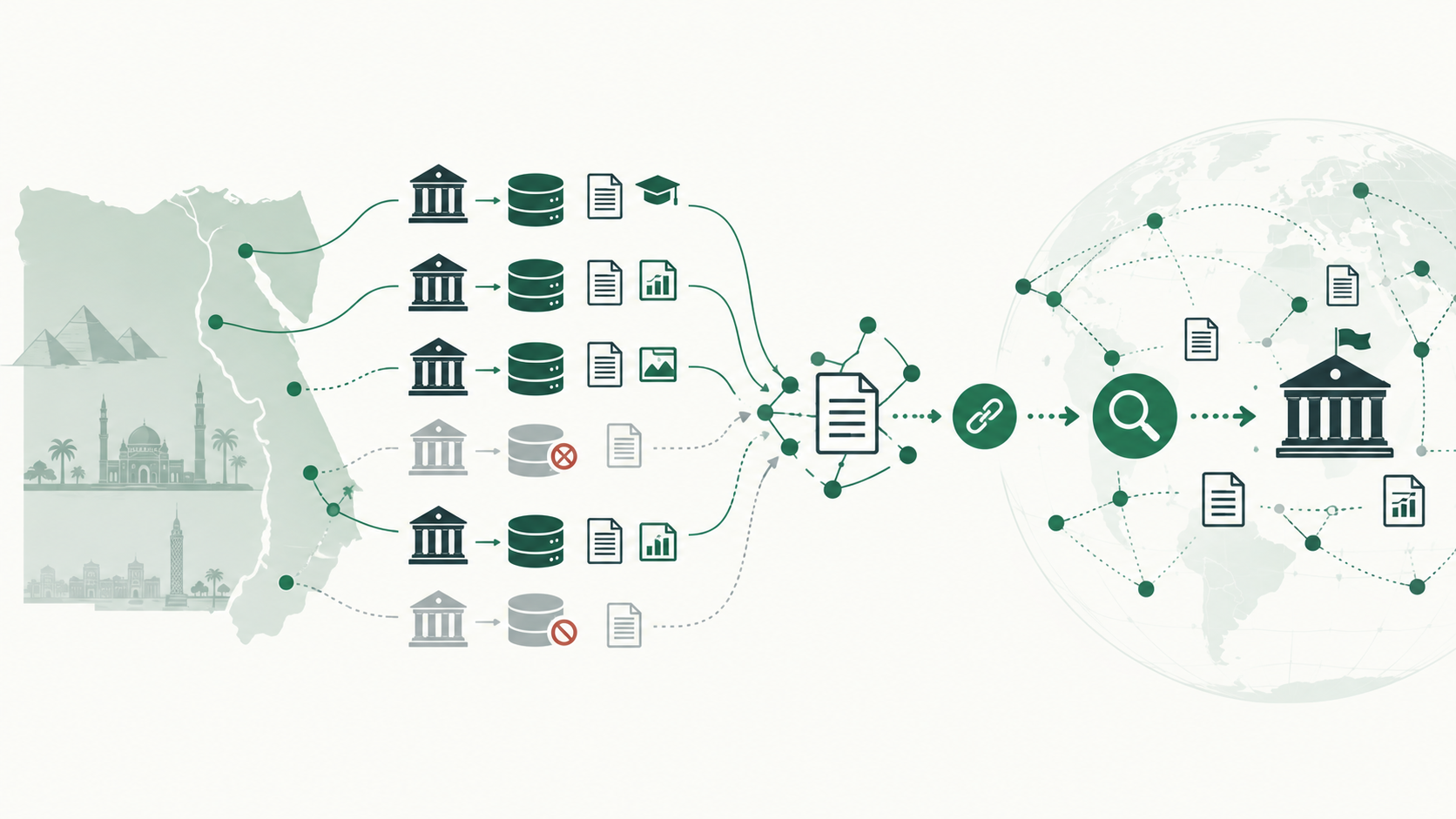
Webometrics examined whether these three recommended practices are visible on the public open-access policy pages of a purposive, stratified sample of twelve public universities spanning twelve EU Member States and four European sub-regions. One institution’s policy pages could not be directly inspected because of an automated bot-protection barrier. Of the eleven remaining institutions, five (45.5%) stated an immediate-deposit or mandatory self-archiving requirement, four (36.4%) stated a Diamond Open Access or no-APC publishing option, and none (0%) stated an institution-wide Data Management Plan requirement — although two institutions referenced a DMP obligation that applies only to externally funded projects, not to their researchers generally. This pattern — visible deposit mandates and OA-cost arrangements, but an absence of general-purpose DMP requirements — mirrors, at the level of individual institutional web pages, the fragmentation the Commission’s report describes at the policy level.
Key Findings
- 5 of 11 assessable universities (45.5%) stated an immediate-deposit or mandatory green open-access self-archiving requirement on their central open-access policy page, collected 23 September 2026: Sorbonne Université (France), Utrecht University (Netherlands), Ghent University (Belgium), the University of Helsinki (Finland), and the Universidad Complutense de Madrid (Spain).
- 0 of 11 assessable universities (0%) stated an institution-wide requirement for researchers to produce a public Data Management Plan. Two universities (Lund University, Sweden, and the Universidad Complutense de Madrid, Spain — 18.2% of the sample) referenced a DMP obligation, but in both cases the page attributed it to an external funder (the European Union’s Horizon Europe programme) rather than to a general university policy.
- 4 of 11 assessable universities (36.4%) stated a Diamond Open Access or no-APC publishing option: Utrecht University and Lund University (through consortium agreements with named publishers), the University of Vienna (through its institutional OJS journal-hosting service), and Charles University (through its university press, Karolinum Press).
- Only 1 of 11 assessable universities (9.1%) — Utrecht University — stated both an immediate-deposit mandate and a Diamond Open Access commitment on the same policy page; 3 of 11 (27.3%) — Sapienza Università di Roma, the Universidade de Lisboa, and Jagiellonian University — stated neither.
- One of the twelve sampled universities, Humboldt-Universität zu Berlin, could not be directly assessed: both of its central open-access policy pages returned an automated bot-protection challenge screen rather than page content at the time of collection, and it is excluded from the percentages above (n=11 of 12 sampled).
Why This Matters for Universities
A university’s formal open-access commitments are only as effective as their visibility to the people expected to act on them — researchers deciding where and how to archive a manuscript, and prospective collaborators or funders trying to understand an institution’s practices before establishing a partnership. The European Commission’s own report frames the problem at the level of national and EU policy: instruments, embargo periods, and monitoring systems vary so much across Member States that a coherent European framework has not yet emerged. That policy-level diagnosis raises a more specific, testable question for individual institutions: when the recommended practices are translated into the terms an outside reader would actually encounter — a stated deposit requirement, a stated data-management obligation, a stated no-fee publishing route — how many university websites actually display them on the page most likely to be searched for that purpose?
This also touches directly on what Webometrics’ Openness indicator is designed to capture at scale: the scholarly-visibility and open-access signals an institution exposes on the open web, quantified across a much larger set of institutions using the UNIRANKS Open Index. The present study does not draw on that larger dataset; it is a smaller, page-level signal check designed to test a specific, current policy question with original evidence, in the tradition Webometrics applies whenever an authoritative external development raises a university-specific research question.
What the Authoritative Source Says
The European Commission’s Directorate-General for Research and Innovation published the report "Open access policies in EU Member States and beyond" on 15 September 2026, covering all 27 EU Member States alongside a smaller set of non-EU comparator countries. The Commission’s accompanying news item states that open-access "progress has been uneven" and that "fragmentation" persists across "policy instruments, legal enforceability, embargo periods, copyright mechanisms, repository requirements, funding models, and monitoring systems." It identifies "rising Article Processing Charges (APCs)" as a concern that "disproportionately affects under-resourced institutions and researchers," and finds that in most Member States, "research assessment systems remain insufficiently aligned with open access objectives, often rewarding prestige and closed publication channels over openness."
The report also finds that the "Diamond Open Access model, which provides free access to research for both readers and authors, is gaining momentum," and that policies lacking "institutional operationalisation (such as deposit workflows, library support, or compliance monitoring), often fail to deliver results." Its recommendations include, at the national level, mandatory Data Management Plans and a move toward "immediate open access for publicly funded research," and at the EU level, stronger coordination through National Points of Reference and the European Research Area Act. The full report is published through the EU Publications Office; this article relies on the Commission’s own news-item summary and the report’s publicly listed metadata and abstract, and did not independently retrieve the complete underlying report text, which is disclosed as a limitation below.
Research Question
Among a defined, stratified sample of public universities across EU Member States, do institutional open-access policy pages display three observable signals connected to the practices the European Commission’s report treats as markers of more effective open-access implementation: a stated immediate-deposit or green open-access mandate, a stated institution-wide Data Management Plan requirement, and a stated Diamond Open Access or no-APC publishing option?
Methodology
Collection date: 23 September 2026.
Sample and stratification: twelve public universities were purposively selected, one per EU Member State, to give geographic and administrative spread across four European sub-regions: Western Europe (Germany, France, the Netherlands, Belgium, Austria), Northern Europe (Sweden, Finland), Southern Europe (Italy, Spain, Portugal), and Eastern Europe (Poland, the Czech Republic). Universities selected were large, comprehensive public research universities generally recognized as their country’s leading or capital-city institution, to maximize the likelihood that a central, English-accessible open-access policy page exists. This is a purposive, illustrative sample, not a random or statistically representative sample of the roughly 3,000 higher-education institutions across the EU, and its findings describe the sampled institutions rather than their national systems as a whole.
Data source and collection method: for each university, Webometrics located the institution’s central library or open-science-office open-access policy page through a direct web search and retrieved that page’s content on 23 September 2026. Where a university’s most relevant page returned an automated bot-protection barrier rather than content on two separate attempts, the institution was recorded as not assessable rather than assumed to lack the signal in question.
Variables: for each accessible page, Webometrics recorded whether the page explicitly stated (a) an immediate-deposit or mandatory green open-access self-archiving requirement applying to the university’s own researchers; (b) a Data Management Plan requirement applying generally to the university’s researchers, as distinct from a requirement the page attributes only to an external funder such as the EU’s Horizon Europe programme; and (c) a Diamond Open Access or no-APC publishing option or arrangement provided or supported by the institution itself.
Analysis approach: each of the three variables was scored as present only where the inspected page contained an explicit statement meeting the definition above; a page that described a concept (for example, explaining what Diamond Open Access is in general terms) without stating the university’s own commitment to it was scored as absent for that variable. Institutions where a page could not be retrieved were excluded from the percentage calculations and reported separately.
Limitations: this is a policy-page visibility signal check, not a compliance audit, a legal analysis, or a measurement of actual deposit rates, DMP submission rates, or Diamond Open Access usage. Only one central page per institution was inspected; several institutions maintain separate PDF policy documents, faculty-level supplements, or dedicated research-data-policy pages that were referenced by, but not always fully retrieved from, the page inspected — for example, Sapienza Università di Roma’s page references a Rector’s Decree research-data-management policy, and Charles University’s page references a separate Research Data Policy, neither of which was independently retrieved for this study. Pages in French, Spanish, and Polish were reviewed through the same content-retrieval tool used for English-language pages, which introduces a small additional interpretation step compared with reading source-language text directly. This article relies on the European Commission’s own news-item summary and the underlying report’s publicly listed metadata rather than the complete report text, which was not independently retrieved. Findings reflect a single collection date and a small, purposive sample, and should not be generalized to each country’s higher-education system as a whole.
Results
| University | Member State | Sub-region | Immediate-deposit / green OA mandate stated | Institution-wide DMP requirement stated | Diamond / no-APC option stated |
|---|---|---|---|---|---|
| Humboldt-Universität zu Berlin | Germany | Western | Not assessable | Not assessable | Not assessable |
| Sorbonne Université | France | Western | Yes | No | No |
| Utrecht University | Netherlands | Western | Yes | No | Yes |
| Ghent University | Belgium | Western | Yes | No | No |
| University of Vienna | Austria | Western | No | No | Yes |
| Lund University | Sweden | Northern | No | No (EU-funder-scoped mention only) | Yes |
| University of Helsinki | Finland | Northern | Yes | No | No |
| Sapienza Università di Roma | Italy | Southern | No | No | No |
| Universidad Complutense de Madrid | Spain | Southern | Yes | No (EU-funder-scoped mention only) | No |
| Universidade de Lisboa | Portugal | Southern | No | No | No |
| Jagiellonian University | Poland | Eastern | No | No | No |
| Charles University | Czech Republic | Eastern | No | No | Yes |
Summary tallies (n = 11 assessable institutions of 12 sampled):
| Signal | Present | Share |
|---|---|---|
| Immediate-deposit / green open-access mandate | 5 of 11 | 45.5% |
| Institution-wide Data Management Plan requirement | 0 of 11 | 0% |
| Diamond Open Access / no-APC option | 4 of 11 | 36.4% |
| Both mandate and Diamond option present | 1 of 11 | 9.1% |
| Neither signal present | 3 of 11 | 27.3% |
Analysis
The sharpest finding in this sample is the complete absence of a general-purpose Data Management Plan requirement: none of the eleven assessable universities’ open-access policy pages stated that their own researchers, as a matter of institutional policy, must produce a Data Management Plan. Two institutions — Lund University and the Universidad Complutense de Madrid — did mention DMPs, but in both cases the page framed the requirement as something imposed by an external funder (the EU’s Horizon Europe programme) on the specific projects it funds, not as a standing institutional expectation applied to research generally. This distinction matters because the Commission’s report recommends mandatory DMPs as a national-level policy instrument, not merely as a condition attached to one funding stream; on the evidence gathered here, the practice these eleven universities’ own policy pages describe sits closer to "DMPs when a funder requires them" than to "DMPs as institutional practice."
Green open-access self-archiving mandates were considerably more visible, appearing on just under half of the assessable pages (5 of 11). Where present, the specific mechanism varied: Sorbonne Université’s policy is framed as a charter commitment tied to its HAL institutional archive; Utrecht University’s is an automatic-deposit arrangement with a researcher opt-out; Ghent University’s and the Universidad Complutense de Madrid’s are framed as standing institutional or national-law deposit requirements; and the University of Helsinki’s combines mandatory self-archiving with a newly introduced prior-license model for retained author rights. This variation in mechanism — charter commitment, automatic deposit with opt-out, statutory requirement, and licensing-based retention — is itself a small illustration of the "policy instruments" fragmentation the Commission’s report describes, observed here not across national laws but across individual university implementation choices.
Diamond Open Access and no-APC arrangements were present on a similar share of pages (4 of 11) but took distinct institutional forms: Lund University’s arrangement operates through the Bibsam Consortium’s national agreements with eight named publishers; Utrecht University’s is framed as a direct financial contribution to non-profit, non-APC publishing initiatives; the University of Vienna’s is built around its own OJS journal-hosting service; and Charles University’s runs through its university press, Karolinum Press, rather than a general fund covering APCs across all journals. None of these four arrangements is a blanket, discipline-agnostic guarantee that any researcher’s article processing charge will be covered; each is a specific, named channel that only covers a subset of possible publishing choices. Only Utrecht University combined both a deposit mandate and a Diamond Open Access commitment on the single page examined, suggesting that even among universities with strong open-access page content, coverage across both the "archive it" and "publish it openly for free" dimensions the Commission’s report discusses remains uncommon.
University Examples
Utrecht University’s page is the only one in this sample that explicitly states both an automatic-deposit self-archiving arrangement and a direct institutional financial contribution to Diamond Open Access initiatives, describing the latter as a "non-profit" alternative that is "not based on Article Processing Charges." Ghent University’s page states a general deposit requirement into its institutional bibliography system, Biblio, while also stating directly that the university "does NOT have a central fund to pay for researchers’ OA publishing costs" — an example of a page that is transparent about a limitation rather than silent on it. Lund University’s page frames its no-APC publishing access through Sweden’s national Bibsam Consortium rather than through a Lund-specific fund, illustrating how some open-access cost arrangements are visible on an individual university’s page but are actually implemented at a national consortium level. Sapienza Università di Roma’s page references a separate Rector’s Decree covering research-data management, without restating that decree’s requirements on the open-access policy page itself — an example of policy information that appears to exist at the institution but was not fully visible on the specific page this study examined, a distinction the Methodology and Limitations sections address directly rather than treating as an absence of policy altogether.
Implications for Higher Education
For university libraries and open-science offices, the clearest and lowest-cost action available from this evidence is separating "what a funder requires for its own grants" from "what the university requires of its researchers generally" when describing Data Management Plan policy on a public page — the current pattern, in which DMPs are mentioned only in a funder-specific context, may understate an institution’s actual practice if a broader internal policy exists but is not stated on the page a researcher or outside observer is most likely to find. For research offices, the variation observed in how a "deposit mandate" is actually implemented — charter commitment, automatic deposit with opt-out, statutory requirement, or licensing-based retention — suggests that comparing institutions on the simple presence or absence of a mandate can obscure meaningful differences in how enforceable or automatic that mandate actually is in practice. For institutional leadership, the Commission’s own finding that policies without "institutional operationalisation" often underperform implies that a stated policy which does not also point to a deposit workflow, a library support contact, or a compliance-monitoring process may be less effective in practice than its wording alone suggests. For communications teams, four of eleven universities in this sample present a named, institution-specific Diamond Open Access or no-fee publishing channel; making that channel easy to find from the same page that states deposit obligations would let researchers act on both practices from a single source rather than needing to locate cost information separately.
Recommended Actions
- State a Data Management Plan expectation clearly as either a general institutional policy or an externally-funder-specific requirement, rather than leaving the scope ambiguous, so that researchers and outside readers can determine whether it applies to their own project.
- Where a deposit mandate exists, specify its actual mechanism (automatic deposit, opt-out process, charter commitment, or statutory requirement) directly on the policy page, since this affects how a researcher should expect it to function in practice.
- Where an institution-specific Diamond Open Access or no-APC arrangement exists, link it directly from the main open-access policy page rather than requiring a separate search, so that deposit obligations and publishing-cost options are discoverable together.
- Confirm that a university’s open-access policy pages are reachable by ordinary automated retrieval and are not inadvertently blocked by bot-management or anti-scraping tools configured for other purposes, since this can prevent both researchers using automated tools and external observers from verifying institutional practice.
None of these actions is presented as a guarantee of improved search visibility, funding eligibility, or Webometrics ranking outcomes; they reflect the specific page-level transparency gaps this study observed, set against practices the European Commission’s own report associates with more effective open-access implementation.
Limitations
This study is a small, purposive, single-collection-date signal check of twelve universities’ central open-access policy pages, not a random or statistically representative sample of the European higher-education sector, a compliance audit, or a measurement of actual researcher behavior, deposit rates, or DMP submission rates. One institution (Humboldt-Universität zu Berlin) could not be assessed because its policy pages returned an automated bot-protection barrier rather than content, and its absence from the quantified results should be read as a data-access limitation, not as evidence about that institution’s actual policies. Only one central page per institution was inspected; supplementary PDF documents, faculty-level policies, or separate research-data-policy pages referenced by several institutions (including Sapienza Università di Roma and Charles University) were not independently retrieved and may contain relevant provisions not reflected in this study’s findings. Non-English pages were reviewed through the same automated content-retrieval and summarization tool used throughout this study, introducing a small additional interpretation step relative to a native-language reader. This article is based on the European Commission’s own published news-item summary and the underlying report’s publicly listed metadata and abstract; the complete report text was not independently retrieved, and any nuance present only in the full report is not reflected here.
Conclusion
The European Commission’s own September 2026 assessment that open-access progress across the European Research Area is "uneven" finds a specific, page-level echo in this study’s evidence: among eleven assessable EU public universities’ central open-access policy pages, fewer than half stated a deposit mandate, just over a third stated an institution-specific Diamond Open Access or no-APC option, and none stated a general institution-wide Data Management Plan requirement — as distinct from a requirement several pages attributed only to an external funder. These findings describe what a defined, purposive sample of institutional web pages stated on 23 September 2026, not a comprehensive audit of each university’s underlying open-access practice, and they point toward a specific, low-cost step available to any institution: stating existing policies, and the scope and mechanism behind them, clearly enough on a single public page that a researcher or outside observer does not need to search further to find them.
Sources
- European Commission, Directorate-General for Research and Innovation, "Open access to the European Research Area: progress remains uneven, new report calls for more concerted action" (15 September 2026). research-and-innovation.ec.europa.eu
- "Open access policies in EU Member States and beyond," Publications Office of the European Union (2026). op.europa.eu
- Humboldt-Universität zu Berlin, University Library open-access policy pages (not assessable at time of collection). ub.hu-berlin.de
- Sorbonne Université, "Nos politiques en faveur de la science ouverte." sorbonne-universite.fr
- Utrecht University Library, "Open access policy." uu.nl
- Ghent University, "Open Access: how?" ugent.be
- University of Vienna, "Open Access." openaccess.univie.ac.at
- Lund University Library, "Open access." ub.lu.se
- University of Helsinki, "Self-archiving at the University of Helsinki." helsinki.fi
- Sapienza Università di Roma, "Sapienza for Open Access." uniroma1.it
- Universidad Complutense de Madrid, "Políticas de acceso abierto." biblioguias.ucm.es
- Universidade de Lisboa, "Repositório ULisboa." ulisboa.pt
- Jagiellonian University, HRS4R "Open Access" page. hrs4r.uj.edu.pl
- Charles University, Open Science Support Centre, "Open Access at Charles University." openscience.cuni.cz
Suggested Citation
Webometrics by UNIRANKS (2026). Uneven by Design? A Webometrics Study of Open-Access Policy Signals Across European University Websites. Webometrics.org, 23 September 2026.
Related Articles