From Metrics to Action: What a 6-Year Case Study Teaches Universities About Improving Webometrics
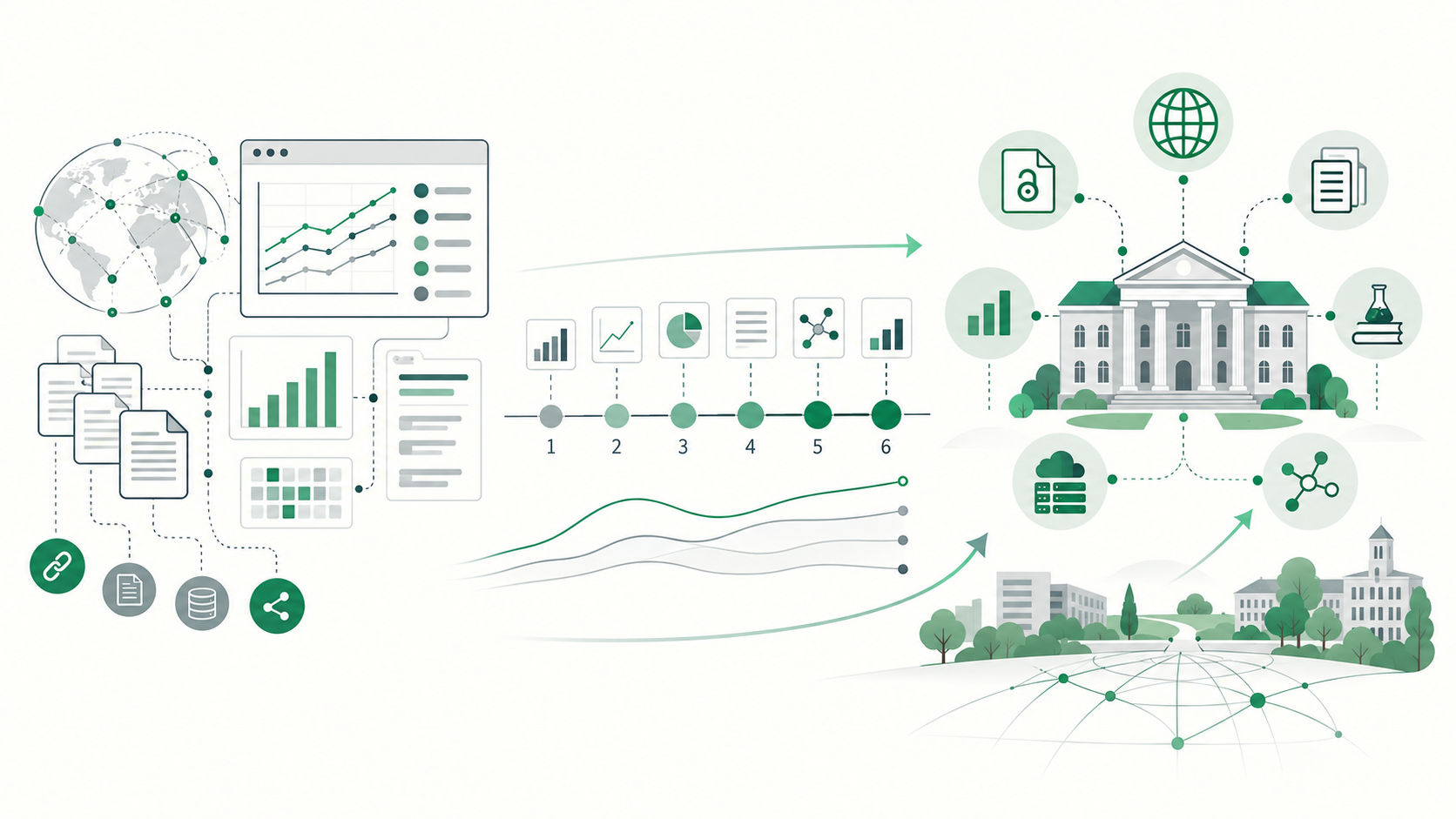
A 2025 open-access study published in Discover Education examined six years of historical Webometrics ranking data for Al Salam University from 2019 to 2024. The study provides a useful case for understanding how institutional digital visibility, openness, and research-related indicators can change over time.
This article reviews the study as an independent academic contribution and summarizes its findings, methods, and limitations.
Research context: The historical ranking data, indicator definitions, and improvement framework discussed in the study reflect the Webometrics framework analyzed by the authors for the 2019–2024 period. They should not be interpreted as the current WEBOMETRICS methodology published on Webometrics.org. The current methodology is organized around Impact, Openness, and Excellence as defined in the official methodology page.
Read the original open-access paper: A strategic framework for enhancing university rankings based on webometrics criteria: a descriptive-analytical approach
What Did the Researchers Study?
The authors examined the historical Webometrics performance of Al Salam University across a six-year period from 2019 to 2024. Their objective was to identify patterns in the university's ranking results and explore institutional factors that might help explain changes across the indicators used in the study.
The paper focuses particularly on the challenges faced by institutions operating in resource-constrained environments, where limitations in digital infrastructure, online visibility, research dissemination, and public access to academic information may affect how institutional activity appears on the web.
What Historical Data Does the Study Present?
The paper reports year-by-year values for global rank, local rank, and three historical indicators identified by the authors as Impact, Openness, and Excellence.
| Year | Global Rank | Local Rank | Impact | Openness | Excellence |
|---|---|---|---|---|---|
| 2019 | 26,675 | 48 | 27,538 | 8,602 | 6,115 |
| 2020 | 27,210 | 49 | 28,245 | 5,819 | 6,626 |
| 2021 | 27,137 | 48 | 27,095 | 6,488 | 6,650 |
| 2022 | 27,171 | 48 | 27,131 | 6,492 | 6,650 |
| 2023 | 27,344 | 56 | 27,226 | 8,183 | 7,237 |
| 2024 | 22,766 | 42 | 30,558 | 2,276 | 6,967 |
These figures are reproduced from the academic study and represent the historical ranking framework analyzed by the authors. They are not presented here as historical editions produced under the current WEBOMETRICS methodology.
What Changed in 2024?
According to the study, 2024 produced the strongest overall global and local ranking positions within the six-year series. Al Salam University reached a global rank of 22,766 and a local rank of 42.
The most substantial movement reported by the authors occurred in the historical Openness indicator, which changed from 8,183 in 2023 to 2,276 in 2024.
The researchers interpret this change in relation to institutional practices associated with open access and research dissemination. At the same time, the historical Impact indicator moved in the opposite direction, illustrating an important point: different dimensions of institutional digital performance do not necessarily change together.
How Did the Researchers Interpret the Indicators?
The study connects changes in historical ranking indicators with broader institutional and digital conditions. The interpretations are those of the study authors and relate to the ranking framework they analyzed.
- Impact: The authors discuss online visibility, external references, digital reach, and institutional web presence as factors relevant to the historical Impact results.
- Openness: The study connects the historical Openness indicator with open-access practices, academic visibility, and researcher presence on scholarly platforms.
- Excellence: The authors interpret changes in the historical Excellence values in relation to scholarly output, research quality, and academic influence.
These historical interpretations should not be substituted for the current definitions of Impact, Openness, and Excellence used by WEBOMETRICS today.
What Methods Did the Researchers Use?
The paper uses a descriptive-analytical approach combining historical ranking trends with institutional strategic analysis.
The methods described by the authors include:
- analysis of historical Webometrics results from 2019 to 2024;
- trend analysis;
- SWOT analysis;
- situation analysis; and
- external digital analytics used to investigate aspects of web visibility.
The study also reports the use of tools such as Majestic and Ubersuggest as part of the authors' diagnostic process. These tools belong to the research design of the paper and should not be interpreted as official data sources of the current WEBOMETRICS ranking.
What Framework Does the Paper Propose?
The researchers use their case study to propose a broader institutional framework organized around the three historical dimensions examined in the paper.
The authors describe their framework as suitable for institutions seeking to understand the relationship between digital presence, openness, research activity, and ranking performance.
“The framework is designed to be adaptable to any institution.”
This proposed framework is an academic recommendation made by the study authors. It is not part of the official WEBOMETRICS ranking methodology.
What Does the Study Suggest About Institutional Digital Performance?
One of the most useful observations from the six-year dataset is that institutional digital performance is multidimensional.
The historical results show that:
- different indicators can move in different directions during the same period;
- an improvement in one dimension does not automatically imply improvement in another;
- changes in overall rank may reflect several simultaneous factors;
- digital infrastructure and public access to institutional knowledge can influence how academic activity is represented online; and
- short-term movements should be interpreted within a longer historical context.
This supports the broader principle that web-based institutional assessment should not rely on one isolated metric.
Why Does the Paper Emphasize Infrastructure and Access?
The authors place significant emphasis on digital infrastructure because public visibility, discoverability, indexing, and access to academic resources depend on functioning institutional digital systems.
This is particularly relevant to institutions operating in environments where internet infrastructure, technical resources, funding, or digital capacity may be uneven.
The study therefore provides useful context for understanding why two academically active institutions may still have very different digital footprints.
What Limitations Does the Study Identify?
The paper acknowledges that web-based indicators can be affected by broader institutional and environmental conditions.
These include:
- differences in language;
- unequal access to digital infrastructure;
- resource limitations;
- institutional capacity;
- differences in web publishing practices; and
- the risk of overinterpreting ranking indicators without sufficient context.
These limitations are important because historical ranking movements should not automatically be interpreted as direct changes in overall educational quality.
What Can Researchers Learn From This Case Study?
The Al Salam University case demonstrates the value of longitudinal analysis. Looking at several years of data makes it possible to identify patterns that may not be visible in a single ranking edition.
For researchers studying digital higher education, the paper is useful because it connects ranking observations with institutional context rather than treating ranking values as self-explanatory.
It also illustrates the importance of distinguishing between:
- ranking indicators;
- institutional digital conditions;
- academic performance;
- researcher interpretation; and
- causal claims.
How Does This Historical Study Relate to the Current WEBOMETRICS Framework?
The current WEBOMETRICS methodology is organized around three principal dimensions: Impact, Openness, and Excellence.
However, the definitions, data architecture, validation processes, and scoring methodology used by the current WEBOMETRICS project should be understood through the current official methodology rather than inferred from historical studies.
Academic research analyzing earlier Webometrics frameworks remains useful for understanding the development of web-based university assessment, but historical indicator definitions should not be assumed to describe the current ranking system.
Read the current WEBOMETRICS Methodology
Why Is This Paper Worth Reading?
The study provides a detailed example of how researchers can analyze university digital performance across several years rather than relying on a single ranking position.
Its strongest contribution is not a formula for improving a ranking. Rather, it demonstrates how historical indicator data can be interpreted alongside institutional context, infrastructure, openness, research activity, and digital visibility.
For readers interested in the authors' full strategic recommendations and implementation framework, the original open-access paper provides the complete analysis.
Frequently Asked Questions
Are the 2019–2024 rankings in this article current WEBOMETRICS ranking editions?
No. The values reproduced in this article come from the independent academic study and represent the historical ranking data analyzed by its authors. They should not be interpreted as ranking editions produced under the current WEBOMETRICS methodology.
Does the study define the current WEBOMETRICS indicators?
No. The paper uses the indicator definitions applicable to the historical framework it studied. Current definitions of Impact, Openness, and Excellence are provided in the official WEBOMETRICS methodology.
Does WEBOMETRICS endorse the improvement framework proposed by the paper?
The framework represents the conclusions and recommendations of the study authors. Its inclusion in this article does not make it part of the official WEBOMETRICS methodology.
Why publish research about historical Webometrics data?
Historical studies can provide useful insight into the development of web-based university assessment, methodological challenges, institutional digital environments, and the academic study of ranking systems.
References
- Gasmalla, K., Almamoun, O., & Elsiddig, J. (2025). A strategic framework for enhancing university rankings based on webometrics criteria: a descriptive-analytical approach. Open-access PDF
- Current WEBOMETRICS Methodology
Last Updated: September 2026
Related Articles