
Cloudflare's AI-Crawler Defaults and University Websites: A Webometrics DNS Study
On 15 September 2026, Cloudflare introduced a new edge-level classification for web crawlers — Search, Training, and Agent — along with an...

Ten of the 200 leading universities in the July 2026 Webometrics edition publish an llms.txt file on their main domain. On 9 November 2026 Webometrics requested /llms.txt once from the main domain of each institution at world positions 1 to 200 and found a working file at 10 of them (5%): the University of Toronto, Imperial College London, Michigan State University, Universität Zürich, Technische Universität München, Uppsala University, the University of Warwick, the University of Exeter, Queen's University Kingston and the University of Cincinnati. At 135 domains the request returned "not found"; at 40 it could not be determined because the request was blocked, timed out or failed.
llms.txt is a proposed plain-text file that gives AI systems a short, curated guide to a website. This study records who publishes one and what the files contain. It does not measure whether the files change how AI systems answer questions about universities. Webometrics is a UNIRANKS project dedicated to the development and application of webometric university evaluation and research.
The llms.txt proposal, first published by Jeremy Howard in September 2024, suggests that a website place a Markdown file at /llms.txt to help large language models find the most useful information on the site. The only required element is a level-one heading with the name of the site. The proposal then suggests a short summary in a blockquote, optional explanatory text, and sections of links introduced by level-two headings, with an "Optional" section for secondary links. The proposal describes itself as a proposal open for community input; it is not a standard of a formal standards body.
llms.txt is different from robots.txt. A robots.txt file, defined in RFC 9309, tells crawlers which paths they may fetch. llms.txt does not grant or refuse access; it only points to content. Google's guidance on AI features and your website states that site owners do not need to create new machine-readable files, AI text files or markup to appear in AI Overviews or AI Mode.
| Outcome | Universities | Share |
|---|---|---|
| Working llms.txt file | 10 | 5.0% |
| Not found (HTTP 404) | 135 | 67.5% |
| Web page returned instead of a file (HTTP 200, HTML) | 15 | 7.5% |
| Request refused (HTTP 403) | 21 | 10.5% |
| No response within 20 seconds | 17 | 8.5% |
| Other errors | 2 | 1.0% |
| Total | 200 | 100.0% |
| World | University | Country | Sections (H2) | Links |
|---|---|---|---|---|
| 14 | University of Toronto | Canada | 6 | 29 |
| 27 | Imperial College London | United Kingdom | 8 | 21 |
| 48 | Michigan State University | United States | 2 | 5 |
| 74 | Universität Zürich | Switzerland | 3 | 3 |
| 77 | Technische Universität München | Germany | 9 | 42 |
| 92 | Uppsala University | Sweden | 9 | 73 |
| 102 | University of Warwick | United Kingdom | 5 | 0 |
| 122 | University of Exeter | United Kingdom | 5 | 45 |
| 185 | Queen's University Kingston | Canada | 12 | 48 |
| 190 | University of Cincinnati | United States | 0 | 0 |
The sample is dominated by the United States (81 institutions), the United Kingdom (20), Germany (15), Australia (13) and Canada (12). Published files came from the United Kingdom (3 of 20), Canada (2 of 12), the United States (2 of 81), Germany (1 of 15), Switzerland (1 of 5) and Sweden (1 of 5). None of the 13 Australian universities in the sample published a file.
All 10 files open with a level-one heading naming the university, and 9 follow it with a one-paragraph summary in a blockquote. Eight group links into sections such as study, research, news and contact. Two (Imperial College London and Michigan State University) use the "Optional" section the proposal suggests for secondary links.
Fifteen universities returned an ordinary HTML page with status 200 when asked for /llms.txt: some redirected to the homepage, one to a faculty page and others to an error page that was not marked as an error. To a crawler this looks like a file exists when it does not. A plain 404 response for missing files is clearer for any automated client.
For a related view of how AI systems find university information, see how citable universities' own ranking pages are.
This is a single check on one day. Files can be added or removed at any time. Only the main domain listed in each Webometrics profile was checked, so a file on another subdomain would not be counted. Twenty per cent of requests could not be resolved, mostly because sites refused or did not answer an automated request; some of those sites may publish a file. The sample covers the world's top 200 in this edition and does not describe universities in general. The study does not assess whether any AI system reads these files.
Among the 200 leading universities in the July 2026 Webometrics edition, 10 (5%) served a working llms.txt file on their main domain on 9 November 2026.
This study did not measure that. Google states that no AI text files are needed to appear in its AI features.
No. robots.txt tells crawlers what they may fetch; llms.txt is an optional guide that points to useful content.
The Webometrics methodology does not mention llms.txt. Its indicators are described on the detailed methodology page.
Questions about how your institution appears in Webometrics, or about improving its web presence? Contact the Webometrics team.
Webometrics (UNIRANKS). (2026). Do Leading Universities Publish llms.txt? A Check of the Top 200. Webometrics.org. Data collected 9 November 2026.
Read our Editorial Standards & Publication Policy, including how to report an error.
On 15 September 2026, Cloudflare introduced a new edge-level classification for web crawlers — Search, Training, and Agent — along with an...
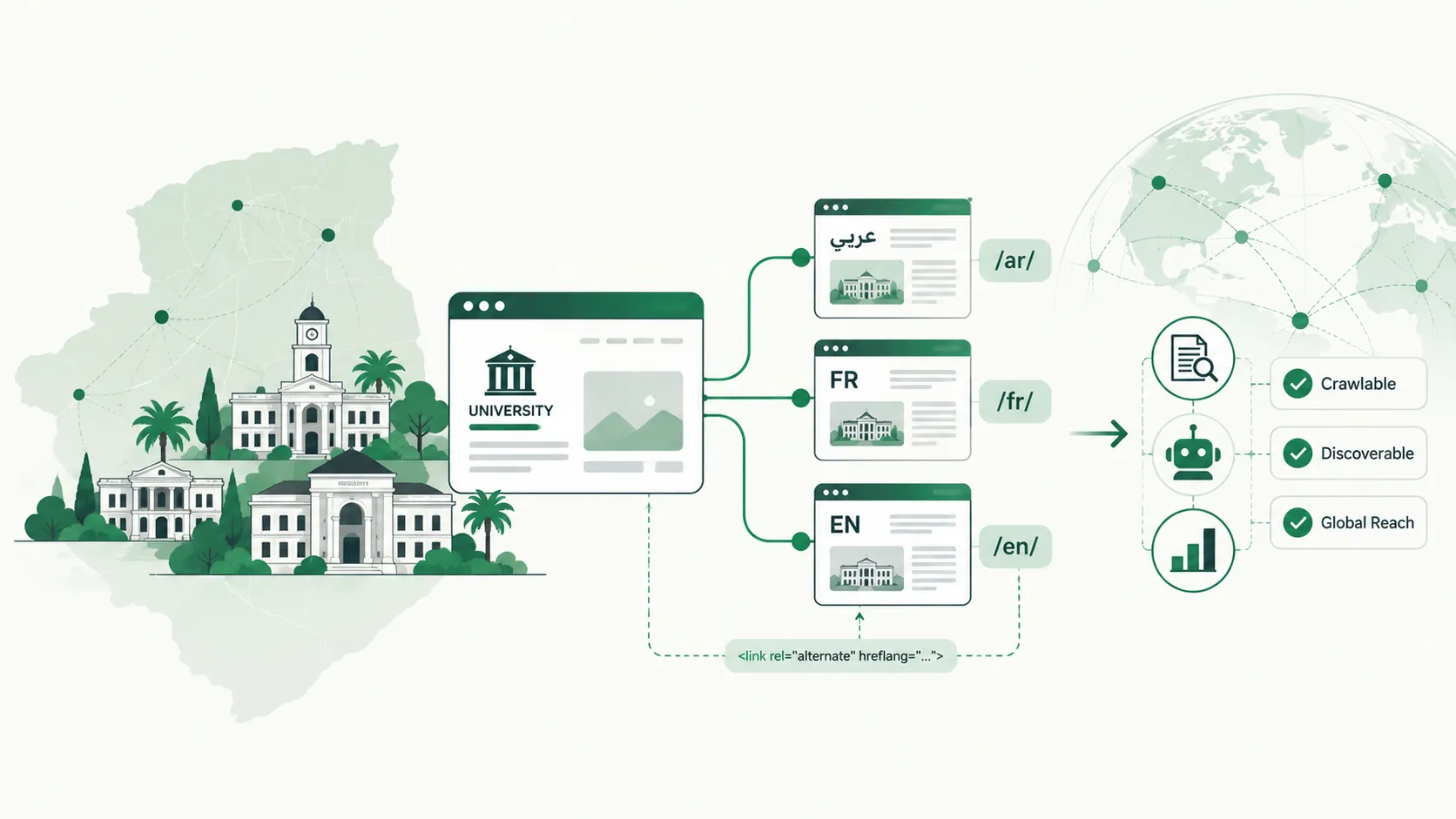
Algeria is a linguistically layered higher-education market: Arabic is the country's constitutional official language, Tamazight has held...
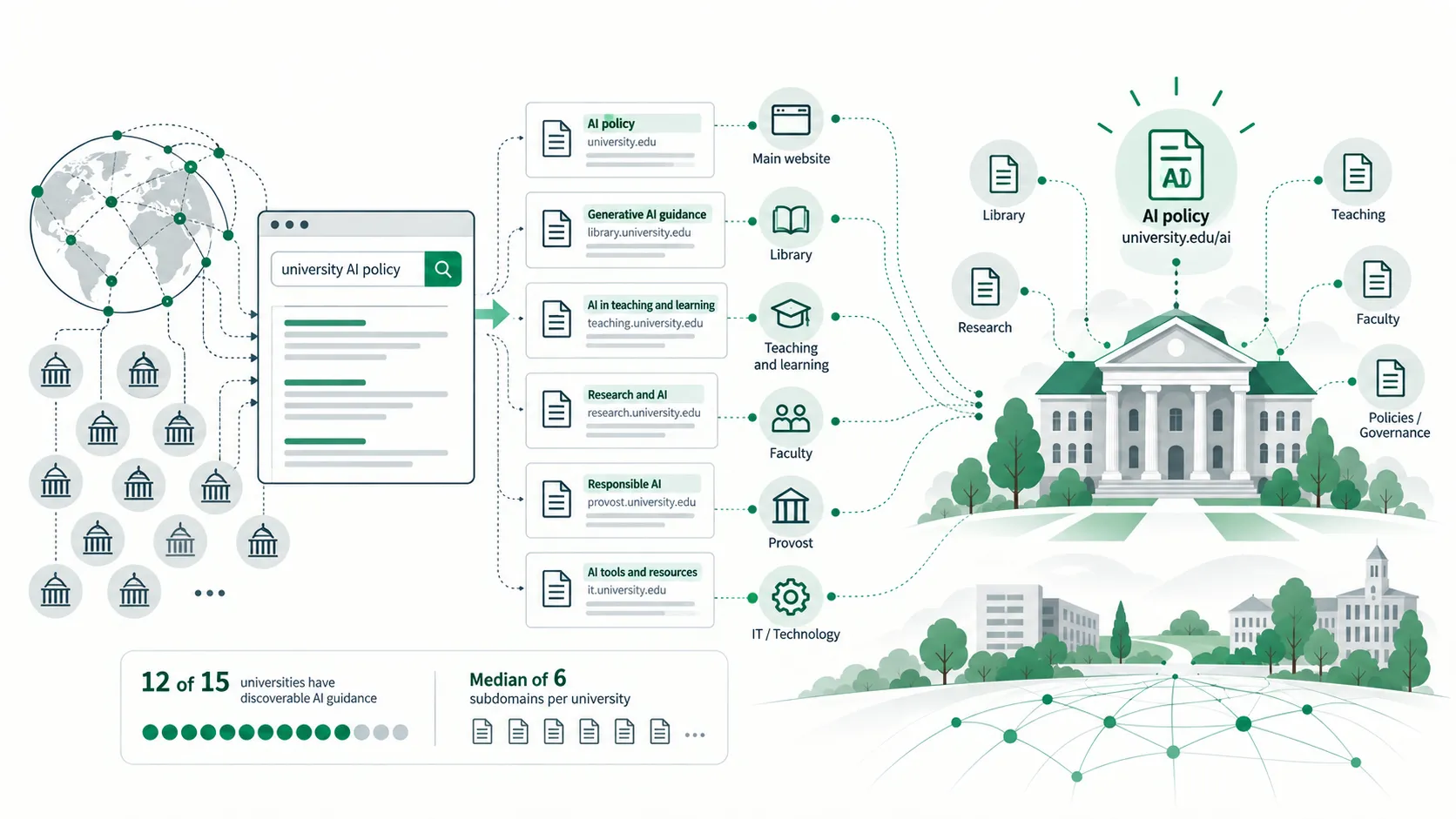
At UNESCO's Digital Learning Week 2026 (8–11 September 2026, Paris), more than 25 education ministers adopted a joint statement on sustaining...
Research studies of how universities appear on the web, in search and in AI tools.
 Latest research
How to Report a Closed University to Webometrics
20 November 2026
The Webometrics ranking of universities worldwide and by region, built on Impact, Openness and Excellence.
 Current edition
July 2026 Webometrics Edition: Countries, Regions and Leaders
09 November 2026
Who we are, how the ranking is calculated, and the standards we publish by.
 How we work
Editorial Standards & Publication Policy
09 November 2026